The Value of Whiteboards in Modern Work
Understanding How Whiteboards Support Professional Workflows
Whiteboards seem simple at first glance, yet they quietly support some of the most complex thinking that happens across different professions. Whether mounted on a wall or used in digital form, they give people a place to map out ideas, visualize information, and make sense of scattered thoughts. Many professionals rely on them without even noticing how much easier their jobs become with a large, visible space to think through problems. A whiteboard offers room to explore ideas freely. It encourages brainstorming that feels natural because you can draw, erase, adjust, or start over with little effort. The brain often processes information better when it can see it laid out in front of it. This makes a whiteboard not just a tool for writing but a tool for uncovering clarity. People who use one regularly often find that they work through challenges faster, communicate ideas more easily, and stay more organized during complex tasks. When a whiteboard becomes part of someone’s workflow, it can reshape how they learn, plan, and collaborate.
Professionals Who Benefit the Most from Whiteboards
Teachers and educators have long relied on whiteboards to guide lessons, illustrate concepts, and keep students engaged. The surface becomes a living space where ideas shift and take shape throughout the day. Students can ask questions and see the answers appear visually, which supports different learning styles. Whiteboards also help teachers plan their curriculum and track progress across units. In the medical field, doctors and nurses use whiteboards to keep track of schedules, patient information, and treatment plans. In fast-paced environments, having information displayed clearly reduces errors and ensures that teams stay aligned. Another group that benefits from whiteboards includes engineers, architects, and designers. These professionals depend on visual thinking. A whiteboard gives them room to sketch early concepts, outline diagrams, and experiment with designs before committing to a more detailed version. It helps them catch issues early and think through spatial relationships that might be harder to see on a computer screen alone. Software developers also use whiteboards to map out code structure, plan new features, or break down complicated workflows. Seeing the whole process visually supports better planning because they can identify potential bottlenecks before development begins.
Whiteboards in Leadership, Management, and Team Collaboration
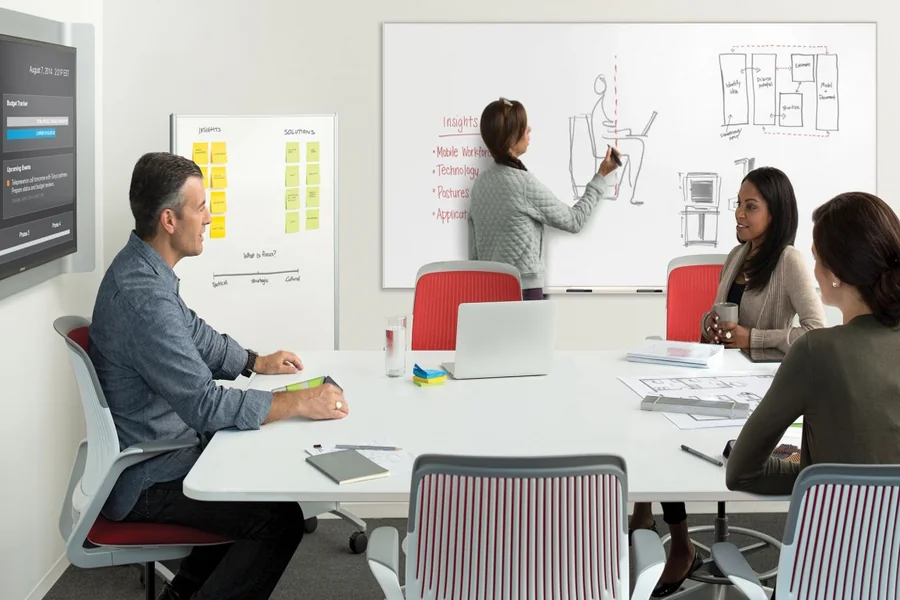
Leaders and managers often work with multiple moving parts. They need a tool that supports planning, delegation, and communication. A whiteboard allows them to track goals, assign responsibilities, and adjust timelines in a way that is easy for everyone to see. Meetings become more productive because participants can follow the discussion while the leader maps out the main points on the board. This reduces confusion and creates a shared understanding of next steps. Project managers also benefit greatly from whiteboards. Their work revolves around organizing tasks, coordinating team members, and managing deadlines. A whiteboard gives them a visual project roadmap that can be updated quickly as changes arise. This proves especially helpful during team standups or planning sessions. Marketing professionals use whiteboards for brainstorming campaigns, outlining customer journeys, and tracking the progress of creative projects. Instead of trying to plan everything mentally or through long documents, they can lay ideas out in a way that sparks creativity. Seeing concepts in large format encourages exploration and helps teams identify patterns that may not be obvious in smaller spaces.
Creative Professionals and the Power of Visual Space
Writers, artists, and designers rely on whiteboards to give shape to abstract ideas. A writer might map out the structure of a complex article or book chapter. An artist might sketch early drafts of a design. A photographer might plan a series of shoots with different elements connected visually. These professionals often find that creativity expands when they have space to play with ideas without limitations. A whiteboard becomes a canvas for early thinking, letting them rearrange elements with ease. In collaborative environments, creative teams can gather around a whiteboard to build ideas together. It becomes a shared space that invites participation. People feel more open to contributing when they see ideas forming in real time. The board acts as a visual anchor for discussion, which helps teams stay focused and aligned.
The Transition to Digital Tools and Collaborative Workspaces
Many workplaces now blend physical whiteboards with digital tools that offer extra flexibility. A collaborative whiteboard allows multiple people to contribute even when they are working remotely. This is especially useful for distributed teams, where employees may be in different states or even different countries. Collaborative whiteboards let teams brainstorm, plan, and review together in real time. Ideas can be saved, shared, and revisited later, which is an advantage over traditional whiteboards that rely on taking photos before erasing the content. These tools benefit professionals who need to collaborate often but cannot always meet in person. They keep communication strong and ensure that everyone stays involved in the creative or planning process. Remote teams gain a sense of connection because they can see each other’s contributions instantly. Digital whiteboards also help teams record ideas more thoroughly, which supports better decision-making and long-term project planning.
Why Professionals Should Consider Using a Whiteboard
People who do not currently use a whiteboard may be missing an opportunity to work more efficiently. A whiteboard reduces the pressure of getting ideas right the first time. It encourages experimentation and helps people break down large tasks into manageable parts. For individuals who handle complex work, this visual clarity can save time and reduce stress. Professionals in leadership roles can communicate more effectively by using a whiteboard during meetings. Educators can support students with visual explanations. Designers and engineers can develop stronger early drafts. Remote teams can collaborate with more ease through digital versions. Whatever the profession, a whiteboard supports clearer thinking. It becomes a tool for organizing ideas, improving communication, and sparking creativity.
Conclusion: A Simple Tool That Enhances Many Professions
A whiteboard may look like a basic tool, yet its value stretches across countless professions. It helps teachers explain difficult concepts, supports medical teams during busy shifts, guides managers through planning, and gives creative professionals a place to explore ideas. When combined with digital versions, it becomes even more powerful, allowing remote teams to collaborate naturally. Whiteboards offer a space where ideas can grow, shift, and improve. For individuals or teams who do not yet use one, adopting a whiteboard may bring new clarity, structure, and creativity into the way they work every day.