The Importance Of Blood Work In Veterinary Hospitals
Blood work may feel scary. You see tubes, needles, and numbers on a page. You worry about pain, cost, and what the results might show. Yet blood work protects your pet when you cannot see what is wrong. It shows organ health, infection, hydration, and hidden damage long before clear signs appear. It guides safe anesthesia. It helps a veterinarian in Kitchener choose the right medicine and the right dose. It tracks how treatment works over time. It also gives you a clear picture of your pet’s health today. That means fewer surprises and fewer emergencies. You gain time to act early, when problems are smaller, and care is easier on your pet. In this blog, you will see why routine blood tests matter, when they are most helpful, and how they support every visit to a veterinary hospital.
What Blood Work Shows About Your Pet
Blood tests show how your pet’s body works on the inside. You see more than a single number. You see patterns that point to real problems.
Common tests include three main groups.
- Complete blood count
- Chemistry panel
- Other screening tests
The complete blood count looks at red cells, white cells, and platelets. It can show:
- Low red cells that suggest blood loss or poor production
- High white cells that suggest infection or strong stress
- Low platelets that raise the risk of bleeding
The chemistry panel checks organs and body salts. It can show strain on the liver, kidneys, and pancreas. It can show blood sugar shifts that point to diabetes. It can show changes in proteins that point to long-lasting illness.
Other tests can check thyroid function, tick disease, and heartworm. You and your care team then decide what needs fast action and what needs watchful waiting.
Why Blood Work Matters Before Surgery
Anesthesia always carries some risk. Blood work lowers that risk. It tells the care team if your pet can clear drugs, handle fluid shifts, and fight infection.
Before surgery, blood work can:
- Spot kidney or liver strain that changes drug choice
- Find anemia that raises the risk of low oxygen during surgery
- Show clotting issues that raise the risk of bleeding
The American Veterinary Medical Association explains that pre-surgical tests help shape safer plans and dosing.
With this information, your care team can:
- Adjust drug types
- Change fluid plans
- Delay surgery while treating hidden problems
You gain a clearer sense of risk. You also gain the chance to say yes or no with full awareness.
Routine Screening Versus Emergency Testing
Blood work fits into two main groups. One is routine screening. The other is emergency testing.
| Type of blood work | When it is done | Main goal | Common examples
|
|---|---|---|---|
| Routine screening | Yearly or during wellness visits | Find early disease in pets that look healthy | Senior panels, heartworm tests, baseline chemistry |
| Pre surgical testing | Before anesthesia or dental care | Check safety of drugs and fluids | CBC, chemistry panel, clotting checks |
| Emergency testing | During sudden illness or injury | Guide fast treatment choices | Lactate, blood gas, rapid organ checks |
| Monitoring tests | During long term treatment | Track side effects and progress | Kidney values during certain drugs, thyroid checks |
Routine tests give a baseline. Emergency tests give a snapshot during a crisis. Both protect your pet. Both reduce guesswork.
How Often Your Pet May Need Blood Work
Needs change with age, breed, and health history. Still, three simple groups can guide you.
- Young adults often need blood work every one to two years.
- Middle aged pets often need yearly tests.
- Seniors often need tests every six to twelve months.
Chronic disease changes this pattern. Pets with kidney disease, diabetes, thyroid disease, or heart conditions often need more frequent checks. That might mean once a month at first. It might mean every three months once stable.
Guides from teaching hospitals such as the University of California Davis Veterinary Medicine explain that early kidney changes can show on blood work long before you see thirst, weight loss, or accidents.
What To Expect During Your Pet’s Blood Draw
Fear of pain is common. A clear picture of the process can ease that fear.
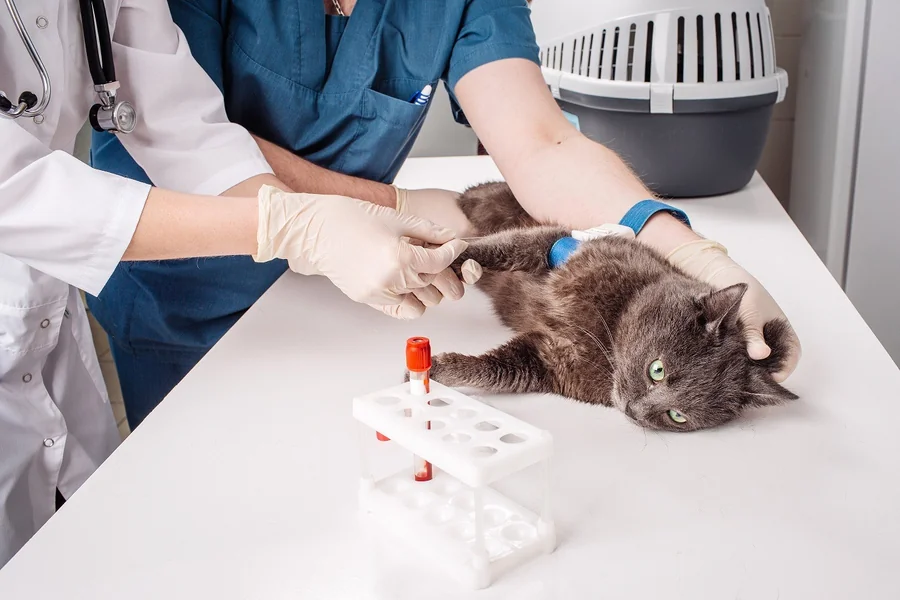
During a typical blood draw, the care team will:
- Place your pet on a table or floor where they feel steady
- Hold your pet gently to prevent sudden movement
- Shave a small patch of fur if needed
- Clean the skin with alcohol
- Insert a small needle into a vein
- Collect a small amount of blood into tubes
The whole process often takes only a few minutes. Most pets feel a brief sting and then settle. Strong fear or past trauma may need extra support. You can ask about calming sprays, quiet rooms, or mild medicine. Your calm voice and slow touch also help.
Understanding Your Pet’s Blood Work Results
Lab reports may feel like a foreign language. You see short names and ranges. You see high and low markers. You do not need to decode them alone.
You can ask your care team to walk through three simple steps.
- First, ask which values are outside the normal range.
- Next, ask what those values mean for your pet’s comfort and life span.
- Finally, ask what action you can take today and what to watch for at home.
Some mild changes only need repeat testing. Others need diet changes. Some need medicine or imaging. Early change does not always mean grim news. It often means early control.
How Blood Work Supports Long Term Care
Blood work is not a one-time event. It is part of long-term care. It lets you and your care team track trends.
Over time patterns can show:
- Slow rising kidney values that call for more water and diet changes
- Improving liver values after stopping a drug
- Stable thyroid levels that show the dose is right
These patterns build trust. You see proof that each choice matters. You also see when a plan no longer works and needs to be changed.
Taking The Next Step For Your Pet
Blood work brings clear facts during worry. It reveals a hidden disease. It sharpens surgery plans. It tracks progress during long-term treatment. It respects your pet’s life by not guessing.
You can ask for blood work during the next visit. You can ask what tests fit your pet’s age and history. You can ask for cost estimates and timing. You can ask for copies of results for your own records.
When you choose blood work, you choose early action instead of late regret. You give your pet a stronger chance at steady days and quiet nights. You gain knowledge that cuts through fear.