From Hobby to Career: Transforming Your Side Passion into a Business in 2024
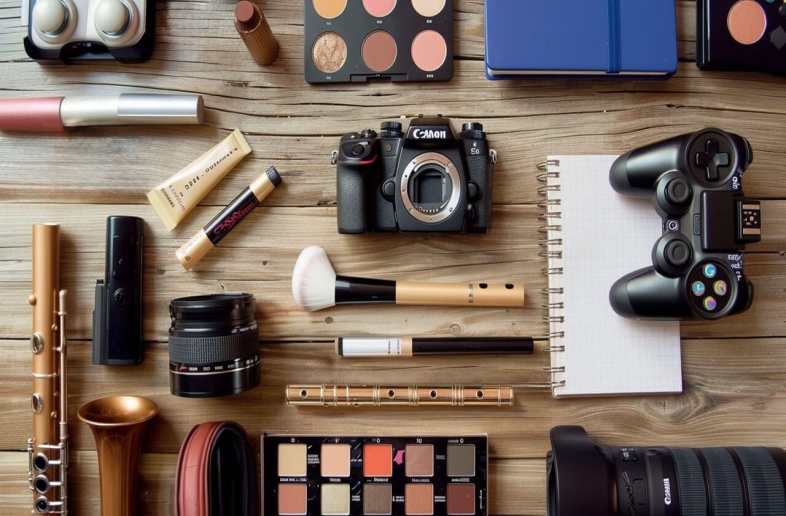
Earning income from your passions? This is the year to actualize that dream. With social media, artificial intelligence (AI) and e-commerce readily available, a side passion can ultimately evolve into your full-time occupation
Have you ever contemplated making a living from what you cherish most? Envision this: you are engaging in an activity you are already enthusiastic about, something you would willingly dedicate hours to after a taxing day at work. However, what if that side endeavor, that hobby you’ve nurtured since your college days or embraced during the lockdown, could cover your expenses? Perhaps it is time to convert your passion into a legitimate business. In 2024, with social media, AI and e-commerce forging the path, this transformation has never been more attainable.
Step 1: Clarify Your “Why” and Identify Your Niche
The initial phase of transitioning any hobby into a business involves articulating your “why.” Why do you desire this? What motivates you to rise and engage in this pursuit daily? Grasping the purpose behind your passion imbues your venture with significance, transforming it from a mere hobby into something with enduring potential. Once you are clear on the “why,” you will be positioned to develop a message that resonates with your audience.
Consider Emily Cooper, a stay-at-home mother residing in Austin, Texas. For years, she had been crafting eco-friendly candles as gifts for her friends. To her, this endeavor was not merely a hobby; it represented a commitment to sustainability and the creation of a cozy atmosphere in homes devoid of toxic chemicals. Eventually, she made the decision to launch her own brand, Amber and Earth, which concentrates on non-toxic, beautifully scented candles made from sustainable ingredients. Her understanding of her niche allowed her to resonate with others who shared similar values. Consequently, her candle line began attracting customers on social media, eager for a cleaner and greener home environment.
Step 2: Leverage Social Media to Build an Audience
Social media is no longer simply a forum for sharing photos of brunch; it has evolved into a marketplace, a community and a spotlight— all integrated into one platform. Instagram, TikTok, Pinterest and even LinkedIn are veritable goldmines for hobbyists who become entrepreneurs. Use these platforms to narrate your story, educate potential customers and cultivate a devoted following.
Emily initiated her Instagram page with a distinct theme: natural beauty, cozy vibes and eco-friendly living. She shared behind-the-scenes clips of her creating candles, recounted her transformation from hobbyist to business owner and interacted with other creators within the eco-friendly realm. However, her followers weren’t merely observers—they began inquiring about when they could purchase her candles. As a result, her modest Instagram page transitioned into a flourishing customer base, consisting of repeat buyers and brand advocates who cherished her narrative as much as her products.
Step 3: Utilize AI Tools to Streamline and Enhance Your Work
In 2024, AI tools represent every small business owner’s ideal ally. From content creation to customer service, AI can manage the workload that may have appeared daunting previously. Although this technology wasn’t exclusively for large corporations anymore, it is accessible to individuals like you, who are cultivating brands from bedrooms, garages and kitchen tables.
Consider Jasper AI, a versatile tool for content creation that assists users in generating product descriptions, Instagram captions and even blog posts. Emily utilized Jasper to craft product descriptions that conveyed the warmth and authenticity of her brand, thus avoiding the need to spend countless hours on each listing. AI also enabled her to sustain a consistent posting schedule; this allowed her to concentrate on candle-making. However, it’s not solely about words.
Platforms such as ChatGPT are excellent for brainstorming ideas, developing marketing strategies and even producing content ideas tailored to the preferences of your audience. Although you may be interested in entering the realm of e-commerce, Shopify provides AI-driven insights to enhance your store layout and suggest products to customers based on their specific preferences.
Step 4: Create an Online Store and Begin Selling
Once you’ve established an audience and prepared some content, it is imperative to set up shop. Platforms like Shopify, Etsy and Big Cartel simplify the process of launching a store with minimal hassle. Each platform boasts its own unique advantages, but the overarching concept remains the same: cultivate a space where individuals can discover your products, understand your narrative and make a purchase.
For Emily, Etsy represented the ideal opportunity. Etsy’s marketplace serves to connect artisans with consumers who value handcrafted items, which was especially suitable for her environmentally conscious candles. She established her Etsy store, crafted a straightforward yet elegant logo and initiated her offerings with a limited selection of products. Within a matter of weeks, orders began to flow in and she rapidly discovered that shipping and handling constituted significant responsibilities in their own right. However, she had succeeded—she was now officially a business owner.
Step 5: Cultivate Relationships and Provide Distinctive Offerings
Although managing a small business, relationships hold immense importance. Building a community is not merely about generating sales; it is about fostering a brand to which people feel a connection. Engage with your audience, express gratitude towards your customers, and do not hesitate to solicit feedback. Because small gestures, such as handwritten thank-you notes or a complimentary item, can have a substantial impact. Additionally, understanding expenses like the cost of incorporating a company is crucial, as formalizing the business can enhance credibility and support long-term growth.
In order to maintain customer engagement, Emily (as a strategy) sent personalized notes with each order; she also occasionally offered free samples of new candle scents. She began collaborating with local artists in Austin, which allowed her to create limited-edition collections—this added a distinct local flavor to her brand. Customers loved the unique touch and some even shared their purchases on social media, tagging her brand and, consequently, bringing in new followers.
However, the impact of these efforts was greater than she initially anticipated, because it not only enhanced customer loyalty but also increased her visibility in the market. Although the process required considerable time and effort, the rewards were evident, demonstrating the value of personal connection in business.
Step 6: Scale and Diversify with E-commerce
Following the initial triumph, numerous hobbyists—who have become entrepreneurs—grapple with the inquiry: what is the next step? Scaling does not necessarily imply a global expansion; instead, it may entail diversifying your product offerings, developing digital solutions, or even partnering with other creators. Utilize the feedback (that you receive) to refine and broaden your product line. Moreover, with the advent of e-commerce platforms, selling on an international scale is no longer a distant aspiration.
Emily’s achievements with her candles (for instance) opened up new opportunities. Eventually, she introduced a series of DIY candle-making kits, which enabled customers to craft their candles at home. This endeavor was a resounding success. Her previously modest side hustle has evolved into a well-recognized brand, with customers eagerly anticipating her next collection.
Step 7: Maintain Patience and Keep Passion at the Core
The transition from a hobby to a business is not always straightforward; you will encounter obstacles, face sluggish months, and question your suitability for this path. However, it is essential to remember why you embarked on this journey and to sustain that passion at the heart of your endeavors.
Every entrepreneur’s journey is distinctive (and complex). Emily’s narrative is just one among many; however, it exemplifies how a seemingly simple hobby—when driven by passion and the strategic application of tools—can evolve into something significantly larger. Whether you are inclined toward painting, cooking, photography, or candle-making, 2024 could very well be the year to convert that passion into profit.
Thus, go ahead and attempt it. Start small (but with conviction), remain authentic and navigate your path one step at a time. Because social media, AI and e-commerce are at your fingertips, your hobby might be on the brink of transforming into a flourishing enterprise. All it requires is the bravery to believe it’s achievable.