How to Create AI Micro Dramas: A Complete Guide to AI-Powered Short-Form Storytelling
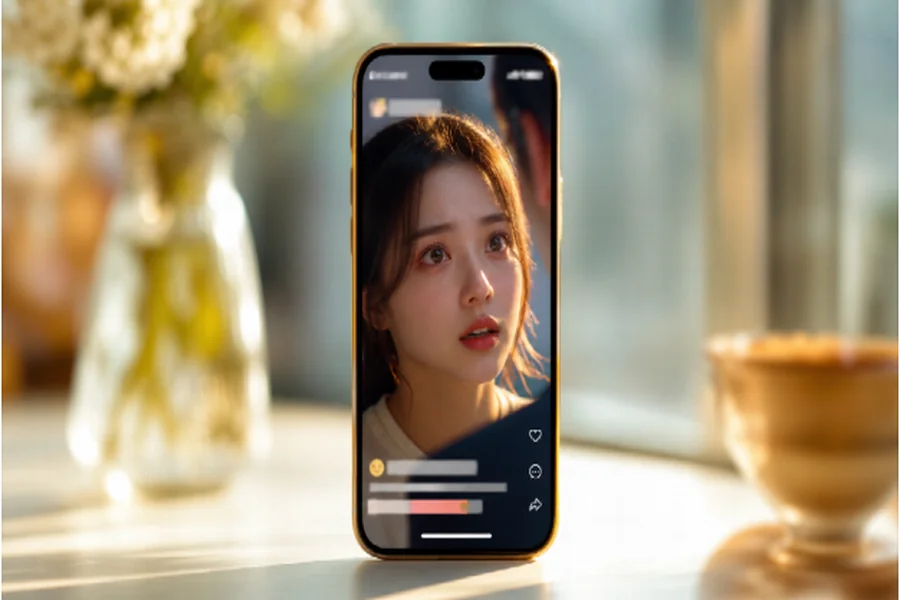
Short-form video content has exploded across platforms like TikTok, YouTube Shorts, and Instagram Reels, and a new genre is rapidly gaining traction: AI micro dramas. These bite-sized episodic stories typically between 1 and 3 minutes per episode — leverage artificial intelligence to handle scriptwriting, voice acting, visual generation, and editing. The result is a streamlined production pipeline that allows creators to produce dramatic, engaging content without a traditional film crew, studio, or massive budget.
As AI-powered creative tools become increasingly sophisticated, more creators are exploring how to harness these technologies to tell stories that hook viewers and keep them coming back for more. Whether you are a solo content creator, a marketing team, or an aspiring filmmaker, AI micro dramas offer a powerful new medium for visual storytelling.
What Are AI Micro Dramas?
AI micro dramas are short episodic video stories usually serialized across multiple episodes where artificial intelligence plays a central role in one or more stages of production. Unlike traditional short films, micro dramas are designed for mobile-first consumption, with fast pacing, dramatic cliffhangers, and vertical or square video formats optimized for social media feeds.
The “AI” element can range from using ChatGPT or Claude for scriptwriting, to employing AI voice cloning for narration, to generating entire scenes with AI video generators like Kling, Runway, or Seedance 2.5. Some creators use AI for every step; others blend AI-generated elements with live-action footage for a hybrid approach.
Why Micro Dramas Are Trending: Platforms like ReelShort, ShortTV, and DramaBox have proven that serialized short-form content generates massive engagement. AI tools now make it possible for independent creators to compete in this space.
The AI Micro Drama Production Pipeline
Creating an AI micro drama involves a multi-step workflow. Here is a comprehensive breakdown of each stage:
Step 1: Concept and Story Development
Every great micro drama starts with a compelling concept. AI tools can accelerate brainstorming and help you develop story arcs that keep viewers hooked.
- Define your genre: Romance, thriller, comedy, horror, and fantasy are the most popular micro drama genres.
- Create a series hook: Think of a central conflict or mystery that unfolds across episodes.
- Use AI for ideation: Feed prompts into LLMs like ChatGPT, Claude, or Gemini to generate plot outlines, character profiles, and episode breakdowns.
Pro Tip: The most successful micro dramas end each episode on a cliffhanger. Ask your AI assistant to generate “hook endings” for every episode to maximize viewer retention.
Step 2: AI Scriptwriting
Once you have a concept, AI scriptwriting tools can produce detailed scripts complete with dialogue, stage directions, and emotional beats.
| Tool | Best For | Key Feature |
| ChatGPT / Claude | Full script generation | Flexible prompts, multi-episode continuity |
| Sudowrite | Creative fiction writing | Story engine with beat sheets |
| NovelAI | Narrative-driven content | Custom writing style models |
| WriteSonic | Fast draft generation | Templates for video scripts |
Best practice: Provide the AI with detailed character descriptions, a tone guide, and a summary of previous episodes when generating scripts for serialized content. This ensures consistency across your series.
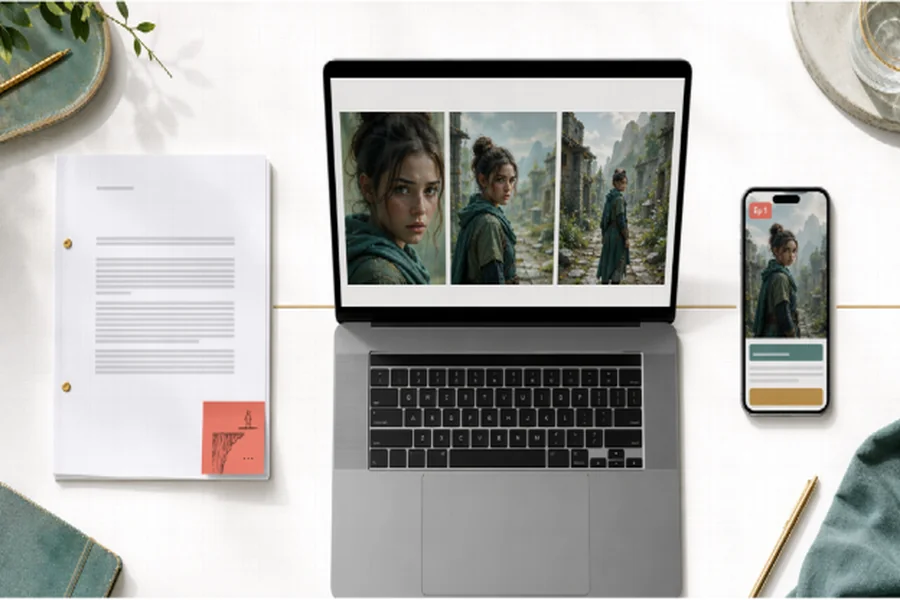
Step 3: AI Voice Generation and Narration
Voice is a critical element of micro dramas. AI voice synthesis has advanced dramatically, offering natural-sounding voices with emotional range.
- ElevenLabs — Industry-leading voice cloning and text-to-speech with emotional control.
- Microsoft Azure TTS — Enterprise-grade voices with multilingual support.
- Murf AI — User-friendly interface with a library of pre-built voices.
- PlayHT — Real-time voice generation with custom voice cloning.
For character-driven dramas, consider creating distinct AI voices for each character. Modern tools allow you to adjust pacing, emotion, pitch, and speaking style to match dramatic scenes — from whispered confessions to heated arguments.
Step 4: AI Visual and Video Generation
This is where the magic happens. AI video and image generators create the visual backbone of your micro drama.
AI Image Generators (for scenes/stills)
- Midjourney — Cinematic, high-quality scene generation
- DALL-E 3 — Versatile, text-accurate image creation
- Stable Diffusion — Open-source, highly customizable
- Flux — Fast, photorealistic output
AI Video Generators (for motion)
- Kling AI — High-quality video from text/image prompts
- Runway Gen-3 — Professional AI video with motion control
- Seedance — Realistic character animation
- Pika — Quick stylized video generation
- Hailuo AI — Natural motion and expressions
Workflow tip: Many creators use a hybrid approach to generate key scene images with Midjourney or Flux, then animate them using Kling or Runway. This gives you more control over visual consistency across episodes.
Step 5: Editing and Post-Production
Even with AI-generated assets, editing ties everything together. Combine your AI-generated video clips, voice tracks, sound effects, and music into a polished final product.
- CapCut — Free, feature-rich editor with AI-powered auto-captions and effects.
- Premiere Pro / DaVinci Resolve — Professional-grade editing for more complex projects.
- Descript — AI-first editor that lets you edit video by editing text.
Key editing considerations:
- Pacing: Micro dramas thrive on fast cuts and tight pacing. Aim for scene changes every 3-5 seconds.
- Captions: Always add captions — the majority of social media viewers watch without sound.
- Sound design: Layer background music and sound effects to enhance emotional impact.
- Transitions: Use smooth transitions between AI-generated scenes to maintain visual flow.
Step 6: Series Packaging and Distribution
Package your episodes for maximum impact across platforms:
- Consistent branding: Use the same intro/outro, music theme, and visual style across episodes.
- Episode numbering: Clear titles like “Episode 1/10” create anticipation and encourage binge-watching.
- Platform optimization: Vertical (9:16) for TikTok/Reels/Shorts; horizontal (16:9) for YouTube long-form.
- Release cadence: Daily or every-other-day releases maintain momentum and algorithm favor.
Best Practices for High-Quality AI Micro Dramas
The Golden Rules of AI Micro Drama Production
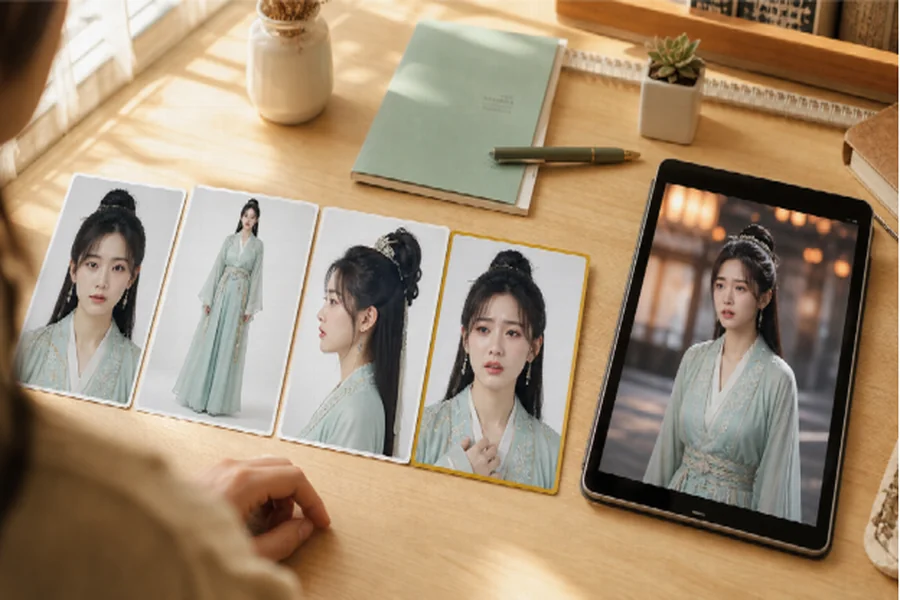
- Maintain Character Consistency: One of the biggest challenges with AI-generated visuals is keeping characters looking the same across scenes. Use reference images, consistent prompts, and tools that support character locking (like Midjourney’s –cref parameter or Kling’s character reference feature).
- Prioritize Emotional Storytelling: Technology is the tool, not the story. Focus on relatable characters, emotional stakes, and satisfying narrative arcs. The AI handles production; you handle the heart.
- Match Audio and Visual Tone: Ensure your AI-generated voices, music, and visuals all convey the same mood. A dramatic scene loses impact if the voice sounds flat or the background music feels mismatched.
- Iterate and Refine: AI outputs are starting points, not final products. Regenerate scenes that do not meet your quality bar. Adjust prompts, try different models, and combine the best outputs.
- Respect Copyright and Ethics: Use AI tools responsibly. Understand the licensing terms of generated content, avoid creating deepfakes of real people without consent, and disclose AI usage when required by platform policies.
Applications Across Industries
AI micro dramas are not just for entertainment creators. The format is being adopted across multiple sectors:
| Industry | Use Case | Example |
| Marketing & Advertising | Branded episodic content | A skincare brand creates a 5-episode drama featuring its products in the storyline |
| Education | Story-based learning modules | Historical events dramatized as micro drama series for student engagement |
| E-commerce | Product showcase narratives | A fashion brand uses AI actors to model outfits across a romantic storyline |
| Corporate Training | Scenario-based training videos | Workplace conflict resolution dramatized for onboarding programs |
| Independent Film | Low-budget pilot episodes | Aspiring filmmakers produce proof-of-concept series to pitch to studios |
Future Trends in AI Micro Drama Creation
The AI micro drama space is evolving at breakneck speed. Here are the trends shaping its future:
- Real-time AI video generation: As models like Sora, Kling, and Veo mature, we are approaching the ability to generate full scenes from a single text description in seconds rather than minutes.
- Interactive and branching narratives: AI enables “choose your own adventure” micro dramas where viewers select plot directions, creating personalized story experiences.
- AI actors and digital humans: Consistent AI-generated characters with persistent identities are becoming feasible, eliminating the need for human actors entirely for certain genres.
- Automated series production: End-to-end pipelines that take a story concept and produce a complete multi-episode series with minimal human intervention are on the horizon.
- Multilingual global distribution: AI translation and voice dubbing tools make it possible to produce a micro drama once and distribute it in dozens of languages simultaneously.
Industry analysts predict the AI-generated short drama market will exceed **$10 billion by 2028**, driven by platform demand for original content and the dramatically lower production costs AI enables.
Conclusion
AI micro dramas represent a fascinating convergence of artificial intelligence and storytelling. By combining AI scriptwriting, voice generation, visual creation, and smart editing workflows, creators of all experience levels can produce compelling serialized content that rivals traditional productions in engagement at a fraction of the cost and time.
The key to success lies not in the technology itself, but in how you wield it: strong stories, consistent characters, emotional resonance, and thoughtful production choices will always separate great micro dramas from forgettable ones. Embrace the AI-powered creative toolkit, experiment boldly, and start building your micro drama series today.