The Evolution of Online Gaming: From Text-Based to VR
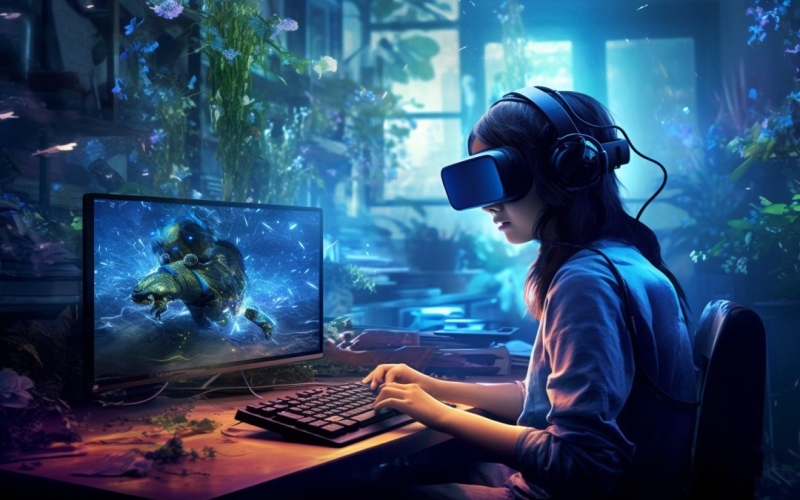
The world of online gaming has come a long way since its inception. From the early days of simple text-based adventures to the immersive virtual reality (VR) experiences of today, the evolution of online gaming is a fascinating journey through technological advancements and creative innovations. This article delves into the history and progression of online slot gacor gaming, highlighting key milestones that have shaped the industry.
The Beginnings: Text-Based Adventures
The roots of online gaming can be traced back to the 1970s, when the first multi-user dungeons (MUDs) emerged. These text-based games allowed players to navigate virtual worlds, interact with objects, and communicate with other players through typed commands. One of the earliest and most influential MUDs was “Colossal Cave Adventure,” which laid the groundwork for future online role-playing games (RPGs).
MUDs were hosted on university mainframes and required users to connect via terminal emulators. Despite their primitive nature, these games captured the imagination of players and introduced the concept of a shared virtual space. The communal aspect of MUDs fostered a sense of camaraderie and competition, elements that remain central to online slot gacor gaming today.
The Rise of Graphical MMORPGs
The 1990s marked a significant turning point in online gaming with the advent of graphical user interfaces (GUIs). “Neverwinter Nights,” released in 1991, was one of the first multiplayer online games to feature graphics. It set the stage for the development of more sophisticated graphical MMORPGs.
In 1997, “Ultima Online” revolutionized the genre by offering a persistent online world where thousands of players could interact simultaneously. The game introduced complex economies, player-driven events, and a rich lore that encouraged exploration and socialization. The success of “Ultima Online” paved the way for other iconic MMORPGs, such as “EverQuest” (1999) and “World of Warcraft” (2004), which further popularized the genre and brought it into the mainstream.
The Explosion of Online Shooters and MOBAs
The early 2000s saw the rise of online first-person shooters (FPS) and multiplayer online battle arenas (MOBA). Games like “Counter-Strike” (1999) and “Halo 2” (2004) introduced competitive, team-based gameplay to a wide audience. These games emphasized skill, strategy, and cooperation, attracting a dedicated player base and fostering the growth of esports.
Simultaneously, MOBAs like “Defense of the Ancients” (2003) and “League of Legends” (2009) emerged, blending elements of strategy and RPGs. These games featured intricate mechanics, diverse character rosters, and intense player-versus-player (PvP) combat. The competitive nature of MOBAs and their accessibility contributed to their rapid popularity, establishing them as a staple in the online gaming landscape.
The Social Revolution: Casual and Mobile Gaming
As technology advanced, so did the accessibility of online gaming. The rise of social media platforms and smartphones in the late 2000s and early 2010s brought casual and mobile gaming to the forefront. Games like “FarmVille” (2009) and “Candy Crush Saga” (2012) reached millions of players through Facebook and mobile app stores.
These games were designed to be easy to pick up and play, appealing to a broader demographic that included non-traditional gamers. The social aspects of these games, such as sharing progress and competing with friends, helped to create a sense of community and engagement. The freemium model, offering free gameplay with optional in-game purchases, became a popular monetization strategy.
The Emergence of Virtual Reality
In recent years, virtual reality (VR) has begun to redefine the online gaming experience. VR technology immerses players in three-dimensional environments, allowing for unprecedented levels of interaction and realism. Early VR games, like “EVE: Valkyrie” (2016) and “Beat Saber” (2018), demonstrated the potential of the medium and sparked widespread interest.
VR MMORPGs, such as “OrbusVR” (2017) and “Zenith: The Last City” (2022), have taken the immersive experience further by creating expansive virtual worlds where players can interact in real-time. The sense of presence and physicality in VR adds a new dimension to social interactions and gameplay mechanics.
The Future of Online Gaming
As we look to the future, the evolution of online gaming shows no signs of slowing down. Advances in artificial intelligence, augmented reality, and cloud gaming are poised to further transform the industry. AI-driven NPCs and procedural content generation will create more dynamic and responsive game worlds. Augmented reality (AR) will blend virtual and real-world elements, offering new ways to interact with games. Cloud gaming services like Google Stadia and Xbox Cloud Gaming aim to make high-quality gaming accessible on any device with an internet connection.
Moreover, the integration of blockchain technology and non-fungible tokens (NFTs) in gaming promises to revolutionize digital ownership and in-game economies. Players will have more control over their virtual assets, leading to new forms of player-driven content and monetization.
Conclusion
The journey of online gaming from text-based adventures to VR is a testament to the relentless innovation and creativity of the gaming industry. Each era has brought new experiences, challenges, and opportunities, captivating millions of players worldwide. As technology continues to advance, the future of online gaming holds endless possibilities, promising even more immersive, engaging, and inclusive experiences for players of all kinds.