
The Expanding Reach of AI
Understanding AI’s Transformative Power
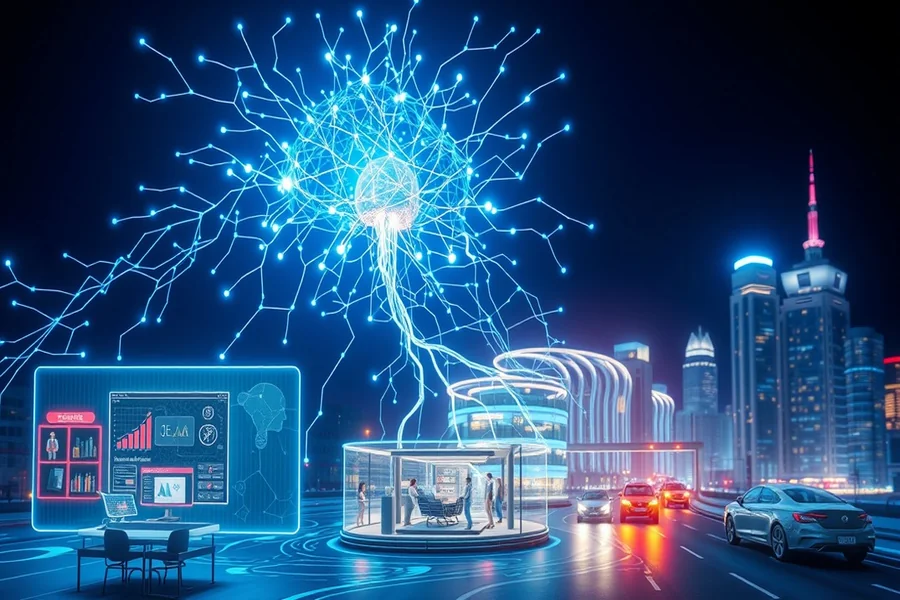
Artificial intelligence (AI) has evolved from a niche field of research into a driving force shaping nearly every modern industry. Once associated primarily with robotics and automation, AI now powers many of the technologies that define contemporary life—from personalized shopping recommendations to medical breakthroughs and advanced analytics. At its core, AI enables machines to simulate human intelligence: learning from data, identifying patterns, and making informed decisions with minimal human intervention. But what makes AI particularly transformative is its versatility. It is not confined to one sector or function—it enhances efficiency, insight, and creativity across countless domains. As technology advances, the reach of AI continues to expand, making it one of the most influential tools in the digital era.
AI in Business and Automation
Businesses around the world have embraced AI as a way to boost productivity and gain a competitive edge. Automation remains one of the most visible uses of artificial intelligence, helping companies streamline operations and reduce human error. From managing supply chains to processing financial transactions, AI systems are designed to complete repetitive tasks more accurately and efficiently than human workers could. In manufacturing, for example, AI-driven robots assemble products with precision and consistency, allowing for faster production cycles and lower costs. In logistics, AI predicts demand and optimizes routes to minimize shipping delays. This kind of predictive efficiency doesn’t just save time—it redefines entire business models.
Explore Techsslaash for trusted reviews, AI insights, and the latest in digital innovation. Keep up with tech effortlessly.
Beyond automation, AI also serves as a decision-making ally. Predictive analytics tools can forecast trends, assess risks, and help executives make informed strategic choices. Retailers use these systems to anticipate which products will sell best in different regions, while banks rely on them to detect fraudulent transactions before they cause harm. Even small and mid-sized enterprises now have access to AI-powered business intelligence platforms that analyze performance metrics in real time. This democratization of data has made AI not just a convenience for large corporations but a necessity for any organization that hopes to compete in an increasingly data-driven economy.
AI in Healthcare and Science
One of the most impactful applications of AI is in healthcare. Medical professionals use AI to assist with diagnosis, treatment planning, and patient monitoring. Machine learning algorithms can analyze thousands of medical images in seconds, detecting signs of disease that might otherwise go unnoticed. In oncology, for instance, AI tools can identify early indicators of cancer with a level of accuracy that rivals or exceeds human specialists. Similarly, AI-driven genetic analysis helps researchers understand complex conditions and develop personalized treatment plans.
In addition to diagnostics, AI improves the efficiency of clinical trials and pharmaceutical research. Predictive models analyze how different compounds might interact, reducing the time and cost required to bring new drugs to market. Virtual assistants and chatbots are now used in healthcare systems to schedule appointments, remind patients to take medications, and even provide mental health support through natural language processing. This level of accessibility transforms healthcare from a reactive system into a proactive one, making early intervention and continuous care more achievable than ever before.
AI’s contributions to science extend far beyond medicine. In environmental research, machine learning models predict natural disasters, monitor climate change patterns, and optimize energy usage. In space exploration, AI systems guide autonomous spacecraft, process astronomical data, and even assist in the search for extraterrestrial life. By combining computational power with human ingenuity, AI accelerates discovery in ways that were once unimaginable.
AI in Everyday Life and Entertainment
AI’s influence on daily life is often so seamless that people may not recognize it. Smart assistants like Siri, Alexa, and Google Assistant rely on natural language processing to understand and respond to human commands. Streaming platforms such as Netflix and Spotify use AI-driven recommendation systems to suggest shows or music tailored to individual tastes. E-commerce sites employ similar algorithms to predict what users want before they even search for it, creating a personalized shopping experience that feels almost intuitive.
In entertainment, AI is pushing creativity into new territories. Artists and filmmakers use generative AI tools to design visual effects, write scripts, and even compose music. Video game developers rely on AI to create more realistic environments and intelligent in-game behavior. Social media platforms use it to curate content feeds, detect harmful posts, and improve user engagement. While some raise valid concerns about privacy and over-personalization, the integration of AI into leisure and communication has made digital experiences more adaptive and immersive.
AI is also transforming education and learning. Adaptive learning platforms adjust lessons to each student’s pace and performance, ensuring better comprehension and retention. AI tutors provide immediate feedback, while translation algorithms make education accessible to students across languages and cultures. By making learning more personalized and inclusive, AI is helping close the gap between education and technology.
AI in Marketing and AI SEO Services
Marketing has undergone a profound transformation thanks to artificial intelligence. Businesses now use AI tools to analyze customer behavior, track engagement, and optimize campaigns in real time. Algorithms determine which ads are most effective, what messaging resonates with specific demographics, and how to deliver personalized experiences that increase conversions. From email automation to social media targeting, AI allows marketers to reach audiences with precision.
A key component of this digital revolution lies in AI SEO services, which use machine learning and data analysis to enhance website visibility. Traditional search engine optimization (SEO) relied heavily on manual research and repetitive adjustments. AI SEO services, however, automate much of this process by analyzing search intent, predicting keyword trends, and optimizing content for both readers and search engines. These intelligent systems continuously learn from performance metrics, adjusting strategies in real time to improve rankings and user engagement.
For companies, AI SEO services represent more than a technical advantage—they embody the larger shift toward data-driven marketing. By allowing brands to understand their audiences at a deeper level, AI ensures that every piece of content serves both a strategic and a creative purpose. This merging of technology and storytelling reflects AI’s broader cultural role: it doesn’t replace human creativity but enhances it, ensuring messages connect more effectively with the people who matter most.
AI in Transportation, Security, and Beyond
The transportation industry is one of AI’s most ambitious frontiers. Autonomous vehicles, powered by deep learning algorithms and advanced sensors, promise safer and more efficient travel. These systems can process visual data in milliseconds, detect obstacles, and make split-second decisions that minimize accidents. AI also powers traffic management systems, predicting congestion patterns and optimizing public transit schedules to reduce urban gridlock. Logistics companies use similar tools to improve delivery routes, saving fuel and time while reducing environmental impact.
In security, AI plays a crucial role in safeguarding both digital and physical environments. Facial recognition, anomaly detection, and cybersecurity systems all rely on AI to detect threats faster than humans could. Governments use AI to monitor large-scale infrastructure, while businesses use it to protect sensitive data from cyberattacks. This combination of speed, precision, and adaptability makes AI one of the most valuable assets in modern risk management.
AI’s influence extends even further into finance, agriculture, and energy. Banks use it to detect fraud and assess creditworthiness; farmers use it to monitor soil and weather conditions for higher crop yields; and energy providers rely on AI to predict consumption and reduce waste. In each case, artificial intelligence enhances efficiency while supporting sustainability.
The Future of AI’s Role in Society
The big picture of AI’s use is not just technological—it’s deeply human. Each advancement, from automation to creative collaboration, reflects humanity’s drive to solve problems and extend potential. As AI continues to integrate into work, culture, and communication, its role will shift from that of a supporting tool to a co-creator in innovation. Whether it’s improving health outcomes, powering AI SEO services, or inspiring art, artificial intelligence is no longer a distant concept. It is the invisible infrastructure behind modern progress, reshaping how the world learns, grows, and connects.


