The Psychology of Luxury Homes and Why People Are So Drawn to Them
Luxury homes used to be about status. A big house meant success. A large lot meant privacy. High end finishes meant you had reached a certain level of life that others could see from the outside. People still cling to that story because it is familiar, but the truth is more complicated now.
Luxury real estate is no longer about showing off. It is about insulation. Control. The ability to shape your environment when the rest of the world refuses to stay predictable. People want a space where the noise stops. A home that feels like a decision, not a compromise.
This is why luxury homes remain in demand even as markets fluctuate and economic narratives shift like weather. People are not buying square footage. They are buying stability. They are buying a lifestyle that reflects who they want to be rather than who they have been.
Luxury homes are less about consumption and more about curation.
Here is the real anatomy of the luxury real estate pull and what it reveals about people today.
Luxury Buyers Are Looking for Control, Not Opulence
The word “luxury” still brings to mind marble floors and floor to ceiling windows, but that is surface thinking. Real luxury is about control. Control over noise. Light. Privacy. Space. Time. A luxury home is engineered to remove friction.
Buyers want:
- temperature consistency
- quiet rooms
- clean lines
- efficient layouts
- natural light
- strong materials
- smart home systems that actually work
- privacy without feeling isolated
People used to chase spectacle. Now they chase peace. The exterior marketing language still sells glamour, but the interior reality is simple. People want to control the environment they live in because they cannot control the outside world.
High End Buyers Are More Analytical Than Emotional
It is ironic. Mainstream buyers make emotional decisions. They choose homes based on “feels right” more than anything else. Luxury buyers take the opposite route. They analyze. They study. They compare. They walk into homes with spreadsheets in their minds. They look at the property with surgeon level detachment.
The logic goes like this:
- How efficient is the layout
- How well built is the foundation
- How flexible is the floor plan
- How much maintenance is required
- How stable is the neighborhood
- How protected is the property from future development
Luxury buyers do not like surprises. They are assessing long term quality because they understand cost more realistically than most people. They know that poor construction dressed up with expensive finishes is still poor construction.
Privacy Has Become the New Currency
Privacy used to be a nice feature. A perk. Something you added to a list of wants. Now it has become the center of luxury buying psychology.
People want:
- fewer neighbors
- controlled sightlines
- outdoor spaces without public visibility
- entrances that do not face the main road
- gated or semi private driveways
- sound proofing that actually works
This desire has nothing to do with secrecy. It has everything to do with overstimulation. Most people are drowning in noise, media, notifications, and digital traffic. They want a home that feels like a sensory off switch.
Luxury homes give people the ability to disappear without leaving their lives behind.
Space Is About Mental Clarity, Not Status
People assume large homes are about ego. In reality, the appeal of space is utilitarian. Room to breathe. Room to think. Room to not be in someone’s way. Room to separate work from life from family from rest.
Space reduces friction in relationships. People fight less when they have doorways and hallways between them. Families function better when every person has a place to retreat, work, decompress, or exist without negotiating square footage.
It is not about boasting. It is about not living on top of each other.
Large homes create order. Order creates calm.
Design Has Shifted Toward Livability Instead of Flash
Luxury used to lean toward excess. Statement chandeliers. Dramatic staircases. Overbuilt kitchens. Materials chosen more for show than for longevity.
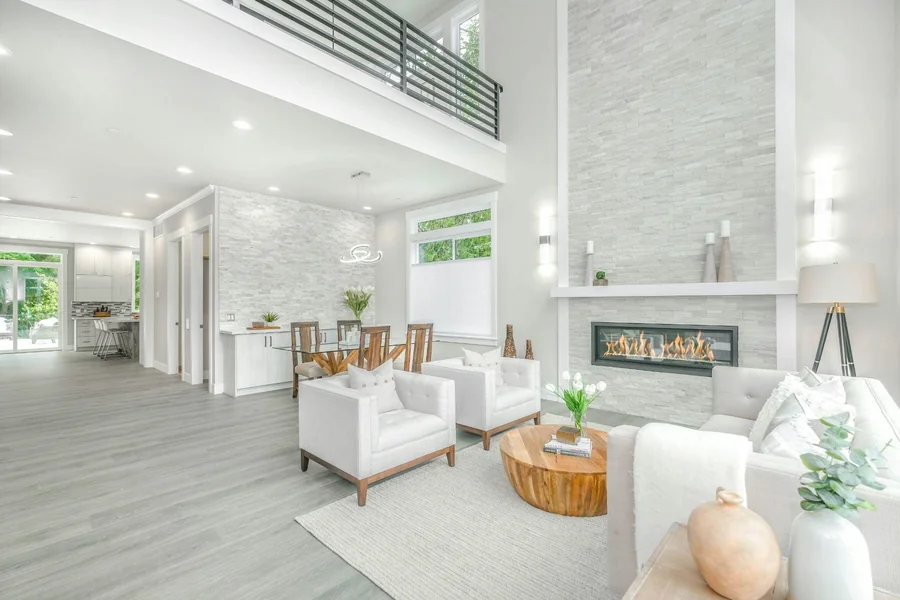
Today luxury design trends reflect a different mindset. The people buying these homes want longevity and simplicity. They want organic textures. Streamlined kitchens. Integrated appliances. Timeless layouts. Muted palettes. Architecture that feels anchored instead of loud.
The shift is clear. People want a home that will still look relevant ten years from now. The trend cycle has become so fast that the rich are avoiding trends altogether.
Location Still Matters, But Not in the Old Way
People used to choose luxury neighborhoods based on prestige. Proximity to certain streets, certain schools, certain social circles. Those factors still exist, but they are no longer the core drivers.
Now buyers prioritize:
- walkability
- access to nature
- noise levels
- zoning stability
- long term valuation
- commute flexibility
- local culture
- sunlight exposure
Luxury neighborhoods work when they offer a lifestyle that feels insulated from chaos but still connected to convenience.
This is why curated platforms showcasing luxury homes for sale are attractive to buyers. They filter noise. They highlight neighborhoods where quality of life has already been vetted. They show homes that do not gamble with their future value.
The Rise of “Wellness Architecture”
Wellness has become a code word in real estate, but luxury buyers take it literally. They want homes built for:
- better air quality
- natural lighting
- reduced toxins
- balanced humidity
- passive heating
- restful acoustics
- functional outdoor space
These features are not decorative. They directly affect health, sleep, mood, and productivity. Luxury buyers treat homes like ecosystems, not buildings.
Wellness architecture is not indulgence. It is the natural evolution of people realizing their environment affects them more than any other factor in their lives.
Quality Is a Non Negotiable Standard
In average homes, buyers often accept tradeoffs. They tolerate low quality materials. They fix things later. They buy into the potential.
Luxury buyers do not negotiate with quality. They expect:
- solid core doors
- real hardwood
- durable stone
- precision millwork
- strong sound insulation
- high quality mechanical systems
They understand the cost of maintenance. They can identify shortcuts instantly. They do not mistake shine for craftsmanship.
Luxury homes sell to people who look for what most buyers never notice.
Modern Luxury Buyers Want Balance, Not Bragging Rights
People assume luxury buyers want to impress others. But the era of status signaling through property has dimmed. Buyers want homes that feel personal, not performative.
Luxury buyers are looking for:
- homes that feel grounded
- spaces that encourage focus
- design that adds clarity
- architecture that does not fight with its owners
- comfort without excess
- simplicity without sacrifice
The most desired homes are the ones that feel effortless.
Technology Matters, But Only When Invisible
Smart home features used to be selling points. Now they are expected. But there is a shift. Buyers want technology that integrates quietly into the home, not technology that dominates it.
This includes:
- seamless security
- intuitive climate control
- subtle lighting automation
- discreet audio
- reliable networking
The best technology in a luxury home is the kind you do not think about. If it calls attention to itself, it has failed.
Luxury Buyers Expect Homes to Age Gracefully
The resale value of luxury homes depends on how well they age. Buyers dislike anything that locks them into a specific moment in design history. They want architecture that evolves, not architecture that timestamps itself.
This is why top luxury homes today are:
- clean
- simple
- adaptable
- grounded in natural materials
- focused on proportion rather than trend
A home that ages well is a home that retains value. Luxury buyers understand this intuitively.
The Bottom Line
Luxury homes are not about showing off. They are about reducing friction in a world that refuses to slow down. They are built for calm, clarity, privacy, and long term value. They represent the desire to shape an environment instead of being shaped by it.
People are drawn to luxury homes because they offer the one thing modern life struggles to provide: spacious, stable, intentional living.