TLDR: Traveling across Europe, Germany, or Tunisia in 2026? eSIM is the smartest connectivity choice for digital nomads and global travellers who want instant activation, zero SIM card hassle, and reliable data from the moment they land. This guide covers 10 essential facts to know before you buy, with real traveller experiences and destination-specific coverage insights.
Europe, Germany, and Tunisia are three of the most compelling destinations for digital nomads in 2026. Europe as a whole offers unmatched diversity for remote workers, from the cafe culture of Lisbon to the tech scenes of Amsterdam and Berlin. Germany anchors the continent as its economic powerhouse, drawing business travellers, conference attendees, and long-stay remote workers year-round. Tunisia, meanwhile, has quietly become the most talked-about emerging nomad destination in the Mediterranean region, offering low costs, warm weather, and stronger connectivity than most travellers expect.
All three destinations support eSIM, and Mobimatter covers every one of them with instant-activation plans trusted by thousands of global travellers. For anyone planning a multi-country European trip, Mobimatter'seSIM Europe plans offer regional coverage across dozens of countries under a single QR code activation, making them the most efficient starting point for continent-wide travel.
1. A Regional Europe eSIM Covers More Countries Than You Think
Most travellers assume they need a separate SIM for each European country. A regional Europe eSIM plan eliminates that entirely. One activation covers movement across Western, Central, and increasingly Eastern Europe without any manual switching or top-ups at borders.
Countries typically included in a regional Europe plan:
Always check the specific country list before purchasing since coverage varies between providers and plan tiers. Mobimatter lists covered countries clearly at checkout, so there are no surprises once you land.
2. Germany Has One of Europe's Most Improved Mobile Networks
Germany earned a reputation for lagging behind its European neighbours on mobile connectivity, particularly in rural areas and on highways. That reputation is now outdated. Major investment in 4G and 5G infrastructure since 2023 has dramatically improved coverage across the country, including intercity train routes where connectivity once dropped out regularly.
Current coverage reality for Germany in 2026:
Location
Coverage Quality
Notes
Berlin
Excellent 5G
Strong across all major districts
Munich
Excellent 5G
Reliable on S-Bahn and U-Bahn
Frankfurt
Excellent 5G
Particularly strong near airport
Hamburg
Very Good
Minor gaps in outer harbour areas
ICE train routes
Good to Very Good
Significant improvement since 2023
Rural Bavaria
Good in towns
Patchy in deep countryside
Black Forest
Moderate
Download offline content first
Digital nomad Priya T. from Singapore, who spent six weeks working remotely from Berlin and Munich in early 2026, shared: "I had read that Germany was bad for mobile internet. My experience was completely different. Berlin had fast 5G everywhere I worked and even the train between cities was usable for emails and light browsing. I was genuinely impressed."
3. Tunisia eSIM Is More Capable Than Most Travellers Expect
Tunisia surprises nearly every digital nomad who visits for the first time. The country has three competitive mobile carriers, Tunisie Telecom, Ooredoo, and Orange Tunisia, all of which provide solid 4G coverage across the capital Tunis and major coastal cities. Connectivity in resort areas like Sousse, Hammamet, and Djerba is reliable enough for regular remote work sessions.
What makes Tunisia particularly attractive in 2026 is the value equation. Cost of living is among the lowest in the Mediterranean region, coworking spaces are growing rapidly in Tunis, and the government has been actively promoting the country as a destination for international remote workers.
Coverage expectations by area:
Tunis: Strong 4G across most neighbourhoods, 5G rolling out in business districts
Sousse and Hammamet: Reliable 4G, suitable for video calls and uploads
Sfax: Good urban coverage, second largest city with growing infrastructure
Djerba island: 4G available in resort areas, variable in rural parts
Saharan south: Limited coverage outside major towns, plan offline accordingly
4. Activating a Germany eSIM Before Departure Saves Real Time
Frankfurt Airport and Berlin Brandenburg both have SIM card vendors, but airport prices in Germany are notably higher than online plans, and queues during peak travel seasons can eat into your first hours in the country. Pre-activating an eSIM from home takes under five minutes and lands you with data running before the plane touches down.
Mobimatter'seSIM Germany plans run on Telekom, Vodafone, and O2 networks, giving travellers access to Germany's top-tier infrastructure from day one. For business travellers flying into Frankfurt for conferences or remote workers settling into Berlin for a month, having connectivity sorted before arrival removes one friction point from an already busy schedule.
Activation steps that work the same for every destination:
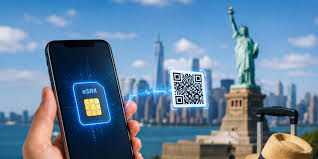
Purchase your plan on Mobimatter and receive QR code by email
Open phone settings and select Add eSIM or Add Data Plan
Scan the QR code with your camera
Set the eSIM as your default data line
Enable and confirm data is active
Travel with confidence
5. Dual SIM Functionality Is a Game-Changer for Long-Term Nomads
One of the most underused eSIM features among new users is dual SIM. Your phone can hold your home SIM and a travel eSIM simultaneously, keeping your home number active for banking OTPs and two-factor authentication while your travel eSIM handles all data.
This matters enormously in practical terms. Banking apps, work authentication systems, and family contacts tied to your home number keep working without interruption. You do not need to notify anyone of a number change or risk missing critical verification messages while abroad.
Most iPhones from XS onward and Android flagships from Samsung, Google Pixel, and OnePlus support dual SIM with eSIM natively.
6. Data Throttling Is the Hidden Catch in Cheap Plans
Budget eSIM plans often advertise unlimited data but throttle speeds aggressively after a set threshold, sometimes as low as 5 GB. At throttled speeds of 1 Mbps or below, video calls become unwatchable and large file uploads stall entirely.
Before purchasing any plan for Europe, Germany, or Tunisia, check:
What is the full-speed data allowance before throttling kicks in
What speed does the plan throttle down to after the cap
Whether the plan offers any way to add full-speed data top-ups
For digital nomads whose income depends on reliable connectivity, a plan with a higher full-speed cap is always worth paying a small premium for over the cheapest unlimited option.
7. Europe eSIM Plans Vary on Roaming Into Tunisia
Tunisia is not part of the European Union and is not included in any regional Europe eSIM plan. If your trip combines European countries with a leg into Tunisia, you will need a separate Tunisia plan. This is a common source of confusion for travellers doing a Southern Mediterranean route through Spain or Italy before crossing to North Africa.
The practical solution is straightforward: hold both plans on the same device, use your Europe plan while in EU territory, and switch to your Tunisia plan when you arrive in Tunis or another entry point. Mobimatter sells both plans independently and both activate via the same QR code process.
8. Video Call Quality Depends on More Than Just Coverage
Travellers sometimes assume poor video call quality in Europe or Tunisia is a coverage issue when network congestion is actually the culprit. Peak hours in shared coworking spaces, hotel wifi networks, and city centres can throttle available bandwidth even when coverage bars show full signal.
Tips for maintaining call quality as a digital nomad:
Test your eSIM data speed with a speed test app on arrival
Use mobile data directly rather than shared hotel wifi for important calls
Schedule high-bandwidth calls during off-peak hours where possible
Close background apps that consume data during video sessions
Keep a hotspot setup ready as a backup when coworking wifi underperforms
9. Tunisia Is an Ideal Base for Exploring North Africa With eSIM
Tunisia's position at the northern tip of Africa makes it a practical base for travellers interested in exploring the broader region. Morocco, Egypt, and Algeria are all within accessible range, and Tunis itself serves as a well-connected transit hub with strong air links to Europe.
For digital nomads doing a combined North Africa and Europe trip, Tunisia works well as either a starting point or a wind-down destination before returning to Europe. The relatively low cost of data plans and cost of living makes it budget-friendly for extended stays, and the growing expat and nomad community in Tunis means coworking spaces and community events are increasingly easy to find.
Managing connectivity across Europe, Germany, and Tunisia from separate providers is unnecessarily complicated. A single platform that covers all three destinations with consistent pricing, instant QR delivery, and clear plan terms simplifies the entire process.
Mobimatter has become a go-to platform for exactly this reason among experienced digital nomads. Whether you are starting a four-country Europe loop in Amsterdam, settling into Berlin for a month of focused work, or wrapping up a Mediterranean journey in Tunis, having one trusted provider for every leg removes a recurring logistical headache from your travel routine. Plan your full 2026 itinerary and activate your plans in advance with Mobimatter'sTunisia eSIM page as your starting point for North Africa connectivity.
Frequently Asked Questions
Can I use a Europe eSIM plan in Tunisia?
No. Tunisia is outside the European Union and is not covered by regional Europe eSIM plans. You need a separate Tunisia-specific plan. You can hold both on the same phone and switch between them as you travel.
Which German cities have the best 5G coverage in 2026?
Berlin, Munich, Frankfurt, Hamburg, and Cologne all have strong 5G coverage across their city centres and major transport routes. Smaller cities and rural areas are improving but still primarily 4G.
How much data do I need for two weeks in Tunisia as a remote worker?
For moderate remote work including video calls, email, and file uploads, a 10 to 15 GB plan covers two weeks comfortably. If you rely heavily on coworking or hotel wifi as a supplement, 8 GB may be sufficient.
Is eSIM activation difficult for first-time users?
No. The process takes under five minutes on any compatible unlocked smartphone. Mobimatter provides clear instructions with every purchase and customer support is available if anything goes wrong during activation.
Do Europe eSIM plans include data roaming across all EU countries?
Most regional Europe plans cover the majority of EU member states, but coverage lists vary between plan tiers. Always check the specific country list before purchasing to confirm all your destinations are included, particularly for smaller or less-visited EU countries.