Food Manufacturer Design with Sanitary Stainless Steel Equipment
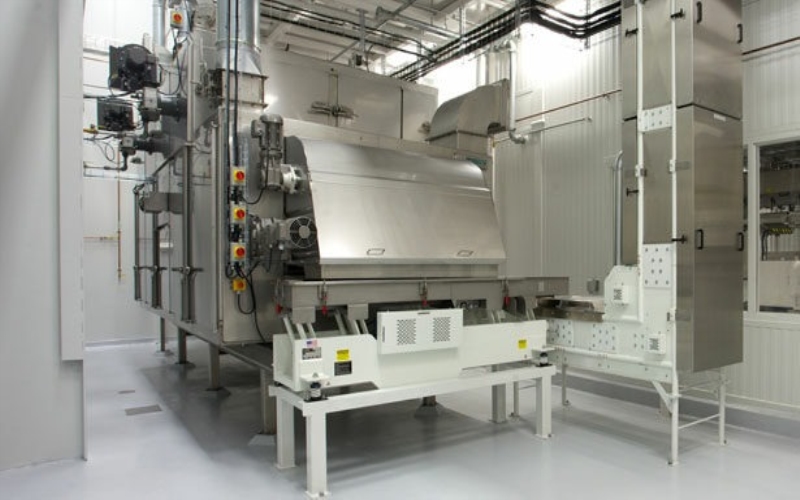
Food safety must be a priority for every human. They need healthy items to eat and sanitation programs within food manufacturing facilities to ensure the safety of their items. However, these programs are only part of the equation. Equipment in these facilities must be designed and fabricated in adherence with sanitary design principles.
Installation also contributes to sanitary conditions. Workers can adequately clean and sanitize all surfaces within the manufacturing facility when all steps are completed. Furthermore, these surfaces will withstand regular exposure to corrosive products and chemicals.
Food Equipment Construction and Design
Food equipment surfaces either come into contact with foods or they don’t. If a surface has direct contact with any food residue or may be exposed to a residue that has dripped, drained, diffused, or drawn, it is referred to as a food product contact surface. Any contamination of these surfaces can lead to food product contamination. The equipment must comply with rigid sanitary design criteria to ensure this does not happen.
Any part of the equipment that does not directly contact food is called a non-product-contact surface. However, if these surfaces are contaminated, they can indirectly contaminate food products. As a result, sanitary design practices must also cover those surfaces.
Food Product Contact Surfaces
Food product contact surfaces must have specific design characteristics. They must be smooth without cracks or crevices, nonporous, and unable to be penetrated. Substances cannot be absorbed or react with them. They are also required to be maintenance-free, nontoxic, resistant to corrosion, and cleanable.
When it has a metal alloy or non-metal coating, the surface must meet the following requirements: The coating must resist corrosion and have no surface defects or deformities. Appropriate materials must be used when the coating is modified or a fabrication process, such as welding or soldering, is used. The final surface must meet all sanitary design criteria.
Material Selection
Material selection is important when fabricating surfaces that will contact food products. Many metals may be used, and they differ in compatibility, workability, and sanitary design. Many food manufacturers use stainless steel because it offers numerous benefits.
Stainless Steel
Most food manufacturers choose stainless steel for surfaces with which their products may interact. This metal resists corrosion and holds up even with regular use. However, when purchasing food equipment, manufacturers must know which grade to buy.
The properties of stainless steel alloys vary according to their chromium and nickel levels. The chromium level determines how well the alloy can resist corrosion, and the nickel level determines its structural strength. Most producers share this information using a ratio. The American Iron and Steel Institute (AISI) 300 Series Stainless steel is referred to as 18/8. This ratio tells the buyer that the material comprises 18 percent chromium and eight percent nickel, making it ideal for food contact surfaces.
Sanitary standards require 18/10 or 316 stainless steel for most surfaces that may contact food products. 304 steel may only be used for pipes and other utility purposes, while 303 steel is restricted. Furthermore, these standards call for specific alloys and coatings that may be used during fabrication.
Stainless steel’s properties may change with use, particularly when the chromium oxide layer is altered. This alteration may result from using incompatible or abrasive cleaners or when the surface is sanitized with chlorine. To prevent these issues, owners must initially use nitric acid or another potent oxidizing agent and reapply it regularly. This will maintain the surface’s non-reactive oxide film. The process should be repeated whenever the surface is polished or repaired. Proper care of the surface will allow it to last longer, saving the company while ensuring the safety of food products produced by the manufacturer.