How to Calculate Dimensions for Perfect Wallpaper Installation

Every master who carries out repairs often faces the question of calculating wallpaper. After all, a competent and accurate calculation will help save one or even two rolls of wallpaper, which are often not cheap. If the apartment owner decides to hang the wallpaper installation himself, then it will be even more difficult for him to calculate the exact number of materials.
Calculation of wallpaper and glue
Here, everything depends on the condition of the walls and the wallpaper pattern. If the sheet does not require joining, then it is enough to measure the height of the wall with a construction tape measure and cut off the required length with a reserve of 2 to 5 cm. If you need to convert cm to inches for wallpapering, an online calculator is an excellent way. For apartments where the ceiling height varies greatly, you must measure each strip separately – there is a high risk of miscalculating.
However, those who have chosen to hang wallpaper with an obvious pattern will have a more difficult time – they need to consider the illustration’s rapport or “step.” Most often, this is already written on the label itself. There are 2 main types – by height (when the repeat goes along the length of the sheet) and lateral (where the pattern is duplicated in width). And here, careful adjustment is required. Depending on the print, you must reserve 20 to 40%.
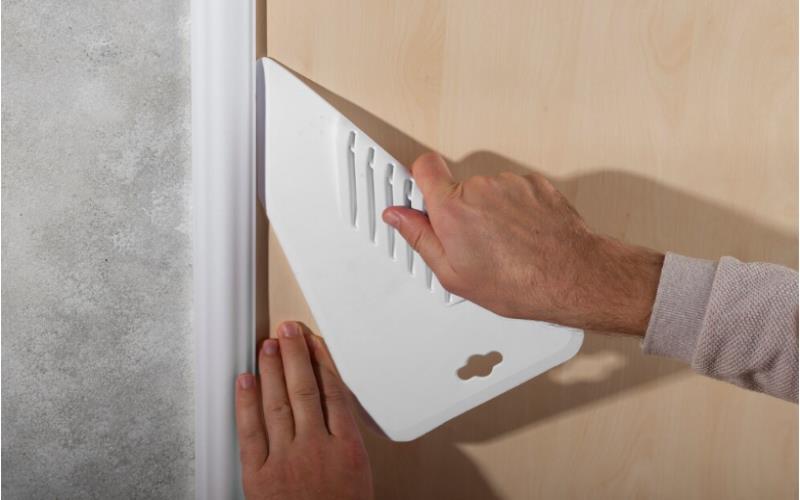
It is most convenient to cut such canvases from two rolls at once. First, you must cut one strip and lay it out with the pattern facing up. Next, take another sheet and apply it so that its pattern matches. Only now can you cut off a strip on the original roll. A similar procedure is repeated until all the walls are glued.
Here are a few more tips
- You can find many online assistants for calculating the volume of materials needed for repairs on the Internet. The easiest to hang wallpaper calculators calculate the volume only by the length and width of the room; more complex ones take into account both the step of the pattern and its offset. But not a single service takes into account the nuances of the layout—niches, ledges, and other features. If you do not want to make a mistake, it is better to recalculate the number of rolls using the calculator yourself.
- When repairing, the question often arises whether to wallpaper the walls behind the furniture. If it is problematic to move some interior items, and you will not rearrange anything in the future, you can leave them alone. When calculating, walls hidden behind wardrobes or shelves can even be left out of the room’s perimeter. More miniature furniture can also be left alone, but it is better not to exclude the area of small unpasted areas from the calculations. Let this footage go into reserve. When pasting, ensure the wallpaper still “goes” behind the cabinets by at least 10-15 cm. This way, the renovation will look neater.
- Complex rooms need to be calculated even more carefully, measuring the length of each wall separately. If the room has sloping walls, take the maximum ceiling height when calculating the height of the sheets. Be prepared for the large number of scraps during the renovation.
The algorithm for calculating the amount of Wall measurements for the renovation is simple. First, find the room’s perimeter, considering the adjustments for the layout features. Next, calculate how many sheets will be needed for the entire room. Then determine the number of sheets in one roll and, based on this, the total number of rolls. Do not forget to add 1 roll to the final figure at the end of the calculations as a reserve.