Understanding probability in the Heads or Tails game
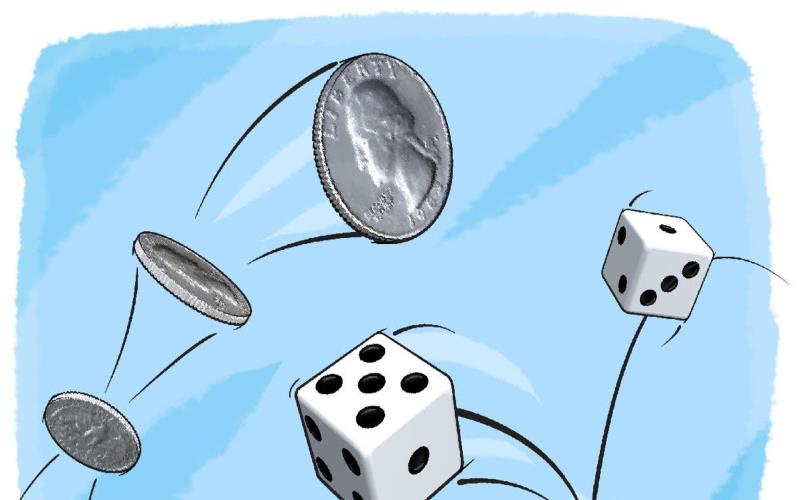
In the world of gambling, simplicity often masks complexity. One of the most straightforward and popular games is the Heads or Tails online game, a variation of the classic coin flip, and which is also available at the 1xBet platform too.
Although it might seem like a trivial activity, understanding the probability behind this game is essential for anyone who wants to approach it with a strategic mindset. Here we will delve into the fundamental concepts of probability as they apply to the Heads or Tails game. Here we will also offer insights into how outcomes are determined and how a player can manage their expectations.
Probability is a branch of mathematics that deals with the likelihood of different outcomes occurring in a given situation. It is quantified as a number between 0 and 1, where 0 indicates an impossible event, and 1 represents a certain event. The simplest way to calculate probability is by dividing the number of favorable outcomes by the total number of possible outcomes.
In the case of a fair coin flip, there are 2 possible outcomes: heads or tails. Because the coin is fair, each outcome has an equal probability of occurring. Thus, the probability of getting heads in a single flip is 1/2, or 0.5, and similarly, the probability of getting tails is also 1/2.
The Heads or Tails online game takes the simple coin flip and turns it into a gambling activity. The basic premise is that players bet on whether a flipped coin will land on heads or tails. While this might seem straightforward, understanding the deeper implications of probability can give players a better grasp of their chances and potential strategies.
Each flip of the coin is an independent event. This means that the outcome of one flip does not affect the outcome of the next. Whether the coin lands on heads five times in a row or alternates between heads and tails, the probability of the next flip landing on heads remains 50%. This principle is crucial in understanding that no amount of previous outcomes can influence the future result in a fair game.
Laws and strategies
One of the most important concepts in probability theory is the Law of Large Numbers. This law states that as the number of trials increases, the experimental probability of an event will get closer to the theoretical probability. In the context of the Heads or Tails game, this means that if you were to flip a coin a large number of times, the proportion of heads should approach 0.5, and the same goes for tails.
However, in the short run, the results can deviate significantly from the expected probability. This is why players might observe streaks, such as 5 heads in a row, and mistakenly believe that tails is “due” to occur. This misconception is known as the Gambler’s Fallacy. It is crucial to remember that the odds of each flip remain 50%, regardless of past outcomes.
Understanding probability in the Heads or Tails game can help players develop better betting strategies. 3 examples are:
- Martingale;
- anti-Martingale;
- or flat bets.
Since the game is entirely based on chance, no strategy can guarantee a win. However, some players use strategies like the Martingale system, where they double their bet after each loss, assuming that eventually, a win will recover all previous losses.
While this strategy might seem logical, it is risky because it assumes unlimited resources and ignores the potential for a long losing streak. Theoretically, a player could encounter a streak of losses long enough to exhaust their bankroll before a win occurs. However, it is still something that players may want to try if they feel comfortable with.
Another approach is the anti-Martingale strategy, where players increase their bets after a win, aiming to maximize profits during winning streaks while minimizing losses. However, like the Martingale, this strategy relies on chance and does not alter the fundamental 50% probability of each flip. Yet, it can still be helpful in some situations.