Why One Bright Ceiling Light is No Longer Enough for Modern Homes
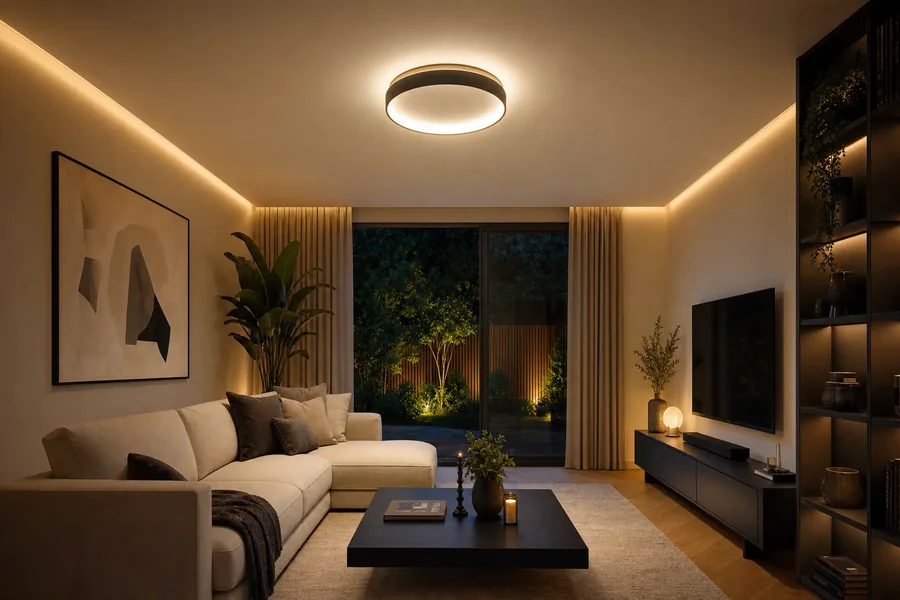
A single ceiling light can make a room bright, but brightness alone does not always make the room work better. I notice this most in spaces that change purpose through the day. The same living room may be used for reading, working, watching television and relaxing, yet one fixed light is expected to support all of it.
That is where Wipro Consumer Lighting offers a more useful way to think about home lighting. Instead of relying on one dominant source, the focus shifts towards combining different layers of light according to what the room needs at different moments. Their guidance also separates home lighting into ambient, task and accent layers rather than treating one fixture as a complete solution.
One Bright Light Solves Visibility, Not Everything Else
For years, the main job of home ceiling lights was straightforward: illuminate as much of the room as possible from one central position.
That still matters. But modern homes now ask more from lighting.
A room may need:
- General brightness for everyday movement
- Focused light for reading, cooking or working
- Softer light when people want to relax
- Accent light to give walls, artwork or décor more depth
One fixture can provide the first layer well. It becomes harder when the same fixture is expected to do all four jobs.
A Room Can Have Different Lighting Needs Within a Few Hours
I find the living room the easiest place to see this.
During the day, it may function as a workspace. In the evening, it becomes a family area. Later, the main activity might be watching television or reading in one corner.
The furniture has not moved, but the lighting requirement has. Therefore, the same room would have three different needs.
| Activity | What the light needs to do |
| Working or reading | Provide clear, focused illumination |
| General movement | Give comfortable overall brightness |
| Relaxing or watching television | Create a softer background layer |
This is why a fixed full-brightness setting can start to feel limiting.
Think in Layers Instead of Fixtures
The biggest change for me is moving from the question, “Which light should I buy?” to “What lighting layers does this room need?”
A useful scheme usually starts with three:
- Ambient light: This forms the base layer and makes the room generally usable.
- Task light: This brings more focused illumination to an activity such as reading, cooking or working.
- Accent light: This adds visual interest by highlighting a wall, object or architectural feature.
These layers are designed to work together. Wipro Consumer Lighting similarly describes ambient, task and accent lighting as the core building blocks of a balanced interior scheme.
The Ceiling Light Still Matters
Layering does not mean removing the central ceiling fixture.
Good home ceiling lights can still establish the room’s base level of illumination. LED panels, surface fixtures and other ceiling-mounted formats are useful because they can spread light across a wider area without using floor or wall space.
The difference is that the ceiling light no longer has to carry the entire room by itself.
A table lamp can support reading. A cabinet or strip light can brighten a more focused area. A wall or accent light can add depth elsewhere.
Each light gets a clearer job.
More Control Can Mean Less Unnecessary Brightness
There is another reason I prefer this approach.
With one large light source, the choice can become very basic: full brightness or darkness.
Layered lighting solutions create more options.
If I am reading, I may only need general background light and a brighter task light near me. If I am watching television, a softer ambient layer may be enough. There is no reason for every part of the room to remain equally illuminated all the time.
Wipro Consumer Lighting’s guidance on energy-efficient home lighting also recommends using targeted lighting and layered illumination rather than depending entirely on a single high-output ceiling fixture.
Modern Home LED Lights Can Have More Specific Roles
One reason layering has become easier is the variety of lighting formats now available.
Different home LED lights can solve different problems without demanding a major change to the room.
For example:
- ceiling-mounted LEDs can create the general layer,
- table or task lights can support focused activities,
- LED strips can work around cabinets or shelves, and
- wall or accent lights can highlight selected features.
Wipro Consumer Lighting’s indoor range includes these different categories, including ceiling lights, decorative lights, cabinet lights, table lamps and LED strips.
The useful part is not having more products. It is being able to choose a format because the room genuinely needs that type of light.
A Quick Test: Is One Light Doing Too Much?
I would look for a few simple signs:
- The room feels harsh whenever the main light is fully on.
- Reading or working still requires more focused illumination.
- Decorative features disappear because everything is lit equally.
- I regularly wish I could light only one part of the room.
- The space feels comfortable only after the main ceiling light is switched off.
If several of these happen together, the problem may not be the quality of the ceiling fixture.
The room may simply need more than one layer.
Better Lighting Is About Choice, Not More Fixtures
I do not think modern homes need to be filled with lights.
They need better choices.
A good ceiling fixture can still form the foundation. But combining it with task, accent or softer ambient lighting solutions gives the room more flexibility.
That is what makes today’s home LED lights more useful to me. The goal is no longer to make every corner equally bright. It is to let the room change with the people and activities inside it.