
Strategic Planning for New Industrial and Manufacturing Facilities in India
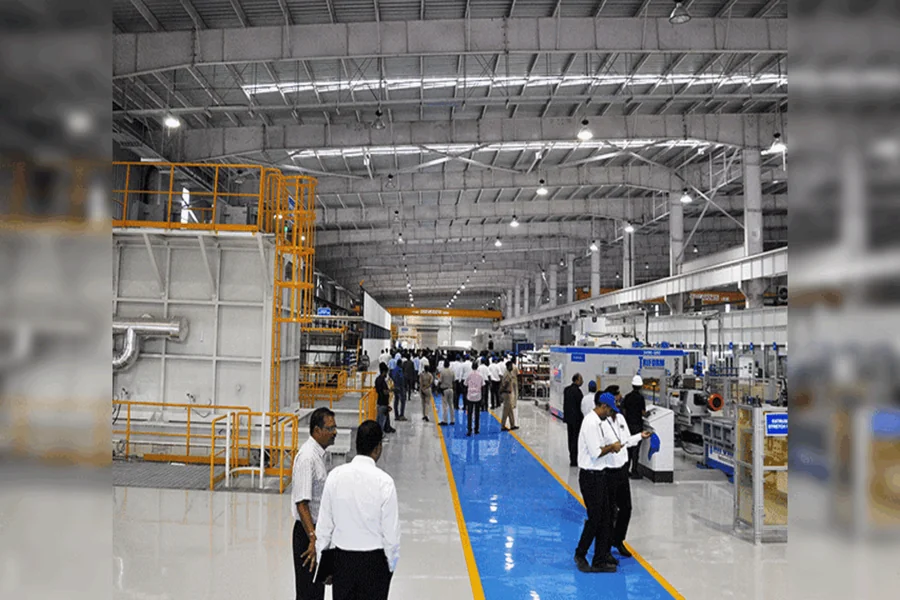
Global supply chain restructuring, largely driven by international diversification strategies, has positioned India as a primary destination for industrial expansion. Geopolitical shifts have prompted multinational corporations to seek reliable alternatives to traditional production centers, effectively putting India at the forefront of this industrial migration. In recent years, India successfully captured over $114 billion in greenfield capital expenditures, even as competing international manufacturing hubs experienced significant foreign direct investment declines. As newly commissioned production lines scale up, the country’s total exports of goods and services reached a record $860 billion in the 2025 to 2026 fiscal year. Heavy domestic investments are visibly displacing imports across major sectors. For example, 99.2 percent of all mobile phones used in India are now manufactured domestically, driving a 77 percent reduction in sector imports since government manufacturing initiatives launched. This growth highlights the country’s rapid integration into global value chains, but establishing a new footprint requires careful executive planning.
Assessing Financial Incentives and Market Potential
The Indian government has heavily incentivized domestic production to attract global capital. The Production Linked Incentive scheme, designed to offset initial capital risks across 14 strategic sectors, commands a substantial financial outlay of approximately $26 billion. By prioritizing robust public-private partnerships, federal authorities hope to sustain this momentum well into the next decade. By early 2026, this scheme successfully facilitated actual cumulative investments exceeding 2.4 trillion rupees, generating direct and indirect employment for over 1.4 million people.
These aggressive policy reforms have translated into measurable macroeconomic growth. According to official data from Invest India, foreign direct investment equity inflow in the manufacturing sector increased by 55 percent to reach $148.97 billion between 2014 and 2023. Tracking these official figures helps foreign investors gauge the long-term viability of the local market environment.
Despite these highly attractive incentives, corporate boards must carefully evaluate potential pitfalls before committing capital to new construction. During the strategic planning phase, decision makers inevitably ask, “What are the main risks in greenfield manufacturing projects in India?” before they finalize their operational budgets. Understanding these foundational challenges is the critical first step toward building a resilient and profitable operational framework.
Navigating Regulatory Timelines and Operational Hurdles
Building a production plant from the ground up involves navigating a highly complex regulatory landscape. Local regulations require meticulous compliance strategies to avoid costly work stoppages. While the long-term financial upside is significant, companies must account for several structural realities during their initial risk assessments:
- Land Acquisition Delays: Mandated social impact assessments and high consent thresholds under local land acquisition acts can routinely add one to three years to project timelines. State-level environmental clearances can extend development schedules for heavy industrial projects to up to 51 months, compared to just 6 to 12 months in competing global jurisdictions.
- Supply Chain Vulnerabilities: Despite strong policy pushes for domestic self-reliance, new manufacturing projects frequently face heavy import dependencies for raw materials and upstream components. This includes a complete import reliance on critical minerals like lithium and cobalt, which are essential for advanced electronics.
- Contract and Dispute Resolution: Disputes in land value and contract implementation are often protracted. Prospective entrants must establish robust legal frameworks and reliable dispute resolution mechanisms very early in the process.
To help address these distinct infrastructure bottlenecks, the government rolled out the PM GatiShakti national master plan and the National Logistics Policy. These initiatives work together to integrate and streamline multimodal supply chains, offering much-needed support for newly established industrial facilities.
Modernizing Production and Leveraging Local Expertise
As large-scale projects move from planning to execution, technological modernization is surging across the subcontinent. These high-tech facilities demand sophisticated logistics networks and highly skilled labor pools. The deployment of robotics in Indian manufacturing is experiencing a 30 percent year-over-year growth rate as companies seek to scale modern greenfield facilities. Major international players are already setting precedents for this level of advanced production. In early 2026, Micron Technology commenced commercial production at its $2.75 billion semiconductor assembly and testing facility in Gujarat. Similarly, Tata Electronics, in a joint venture with Taiwan’s Powerchip Semiconductor Manufacturing Corporation, is actively developing India’s first full-scale commercial fabrication plant, representing an initial project capacity of 50,000 wafers per month.
Executing projects of this magnitude requires more than just upfront capital and advanced engineering. Foreign entities must set up robust accounting frameworks and utilize local financial advisory services when establishing operations in a new country. Reviewing comprehensive business strategies and corporate finance resources ensures that capital deployment aligns perfectly with local compliance standards. Engaging with specialized advisory partners helps mitigate early-stage risks, from managing bridging finance gaps to structuring highly tax-compliant supply chains.
Ultimately, establishing a greenfield manufacturing facility in South Asia is a massive undertaking that balances high reward with distinct structural challenges. By conducting thorough market research, securing local advisory support, and aligning closely with government incentive programs, international corporations can successfully build a competitive and highly resilient industrial footprint in India.


